
Solution
Train-to-Ground Wireless
High-throughput connectivity between moving trains and trackside networks, with handover typically within 5 ms.
- Handover typically within 5 ms
- Up to 700 Mbps per train
- No licensed spectrum

The problem
Rail operators need real-time video, diagnostics and passenger connectivity, but cellular-only networks face coverage gaps and contention, especially in tunnels, stations and remote corridors.
Conventional Wi-Fi roaming depends on controllers and single-radio handoffs, which causes delays and packet loss at train speeds. Private LTE needs licensed spectrum and core infrastructure, which is a large investment for non-safety services like CCTV and Wi-Fi.
How Anywhere solves it
A-OS Mobility uses a dual-radio, make-before-break design. One radio stays connected to the current trackside node while the other connects to the next, and the node switches paths based on real-time link metrics, typically within 5 ms. Nodes make their own routing decisions, so no central controller is needed.
Key capabilities
- Up to 700 Mbps per train at 80 MHz, for CCTV, Wi-Fi and telemetry
- Front and rear mobile nodes for 1 Gbps or more of aggregate throughput
- Controller-less, self-healing mesh along the corridor
- The same AX52e node works on the train and at the trackside
- Backup connectivity for signalling and train control support
- Rolling-stock standards including EN 50121-3-2, EN 50155, EN 61373 and EN 45545-2
How A-OS Mobility compares
Private LTE / LTE-R
High capital cost and complex rollout. Needs licensed spectrum and core infrastructure.
Public LTE / 5G
Inconsistent coverage, particularly in tunnels. Shared bandwidth, no network ownership and recurring charges.
Standard Wi-Fi
Slow roaming and single-radio handoffs lead to disconnects and packet loss.
A-OS Mobility
Dual-radio, controller-less mesh with up to 700 Mbps per train, no licensed spectrum and operator-owned infrastructure.
Who this is for
- Metro and intercity rail operators
- Light rail and monorail
- Airport shuttle systems
- Defence and government rail
- Rail system integrators
Products used
AX52e
AX52e Anywhere Network Node
Dual-radio outdoor node with two external antennas, for backhaul, rail and mobile deployments.
View product →A-OS
Anywhere Operating System (A-OS)
Self-healing, low-latency firmware that runs on every Anywhere node.
View product →A-NM
Anywhere Node Manager (A-NM)
A portable Windows tool for setting up, monitoring and maintaining Anywhere networks.
View product →See it in the field

MTR Corporation · Hong Kong
Multi-hop virtual fibre for essential railway infrastructure
A wireless surveillance system with the throughput to support a demanding number of IP cameras on one of the world’s best known railways.
Read the story →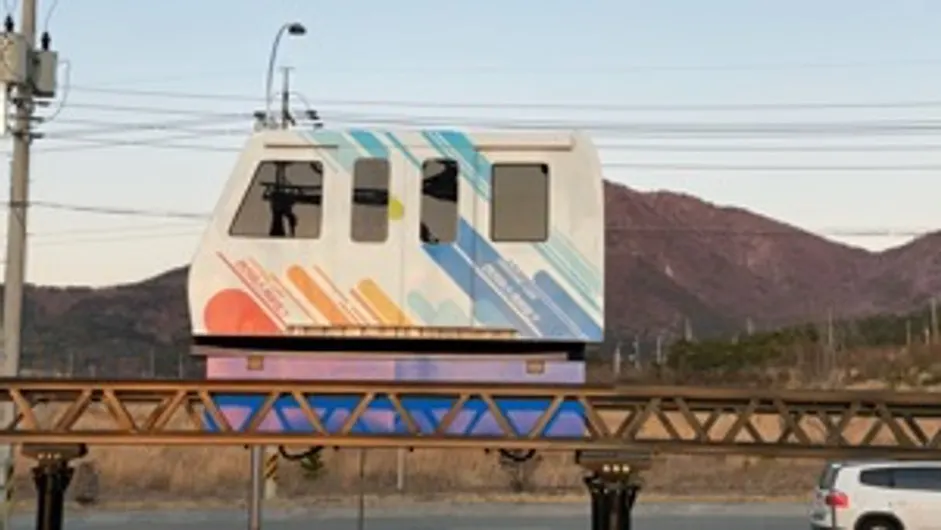
Danyang Monorail Project · Danyang, South Korea
Real-time video from moving monorail cabins
Stable IP camera video from moving cabins, without signal loss.
Read the story →Frequently asked questions
What is make-before-break handover?
The mobile node connects to the next trackside node before leaving the current one. Traffic moves to the new path only once that link is ready, which avoids the gap seen with conventional roaming.
Does it need a central controller?
No. Nodes make their own routing and switching decisions, so there is no controller to deploy or to act as a single point of failure.
Which services can it carry?
Typical uses are real-time CCTV and video offload, passenger Wi-Fi, condition monitoring, and backup links supporting signalling and train control.
How does it compare with LTE-R or public 5G?
Private LTE needs licensed spectrum and core infrastructure, and public networks charge for data and are often weak in tunnels. A mesh corridor uses unlicensed spectrum and operator-owned nodes. Our guide compares the options in detail.
Further reading
Insight
Train-to-Ground Communication: Wi-Fi, LTE-R, 5G and Mesh Compared
Train-to-ground communication options for CCTV, passenger Wi-Fi and diagnostics compared: standard Wi-Fi, private LTE, public 4G and 5G, and wireless mesh.
Read →Insight
Offloading CCTV from Trains over a Wireless Mesh
How rail operators get onboard CCTV off the train: live viewing along the route, bulk offload at stations and depots, and how to size the wireless link.
Read →Insight
Seamless Handover for Moving Vehicles: What Under 5 ms Means for Video
Why conventional Wi-Fi roaming drops video on trains, vehicles and cranes, and how dual-radio, make-before-break handover keeps the link up on the move.
Read →Planning a train-to-ground wireless project?
Our team can help you work out the right solution for your site.